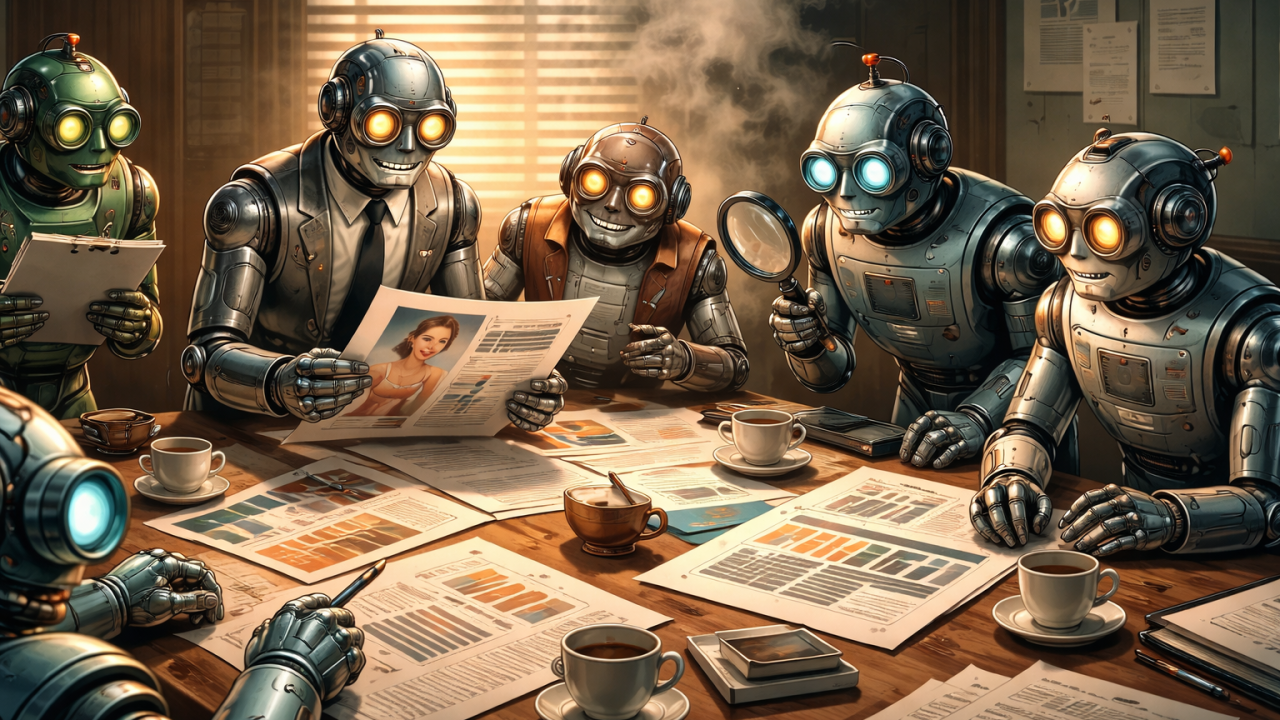

It’s me again, banging the same drum I have multiple times. However, I think this time it’s a little different, I had the opportunity to discuss the future of the agency with some fellow agency founders who I admire deeply. They are on the ground, competing, building and fighting hard to ensure they are not just in business for the next 10 years, but that they’re relevant. Which got me thinking. For most of its history, advertising was built on understanding people.
Not in an abstract way but in a deeply human one. Who they were, what they cared about, what motivated them to act? The tools were limited, but the thinking was rigorous. Ideas were debated, assumptions were challenged, expertise and judgment mattered. Then technology scaled everything. Digital promised precision, accountability, and speed, and for a while, it delivered. We gained access to data we’d never had before. We could measure, optimize, and iterate in real time. But somewhere along the way, the industry made a quiet trade. Understanding was replaced by efficiency. Thinking was replaced by output. That’s how advertising lost its way. Not because technology failed us but because we let efficiency become the goal instead of the outcome and we let the algorithm replace our instincts.
Advertisers led us there, and agencies followed. We optimized, automated, and rationalized our way into a world of commodity thinking and vanity metrics and then acted surprised when the work stopped meaning anything. Now AI is forcing a reckoning, and I think that is a good thing. What excites me about this moment isn’t automation or scale. It’s the return of judgment, intent, and responsibility. Because the next era of advertising isn’t about storefronts or click-outs. It’s about building platforms, environments, and experiences and actually understanding how humans will interact with them. That requires strategic thinking and sometimes gut instinct. It requires knowing when the data is right, and when experience tells you it isn’t.
The agencies that built this industry weren’t hired because they delivered ads more cheaply. They were hired because clients believed in what they thought. When brands worked with David Ogilvy, Mr. Walter Thompson, or the quartet of BBDO and the people who learned under them, it wasn’t about scale or efficiency. It was about insight. About understanding human truth. About knowing why something would resonate before it ever ran. We’ve lost some of that and it’s time to get it back. Today, too many agencies talk about “embracing AI” when what they’re really doing is letting it reinforce the same behaviors that got us here in the first place. Performance theater. Endless optimization. Creative shaped after the fact to justify a media plan, instead of ideas leading the way. AI shouldn’t be used to replace thinking. It should demand better thinking.
This is where AI actually matters and not as a shortcut to creativity, but as a tool that helps us see more clearly, ask better questions, and build work with intention. AI shouldn’t remove the human layer from advertising, it should deepen it. Creative agencies shouldn’t be afraid of this moment. Media agencies shouldn’t hide behind platforms. This is the moment where both disciplines need to sit at the same table again in the same room, with a shared, nuanced understanding of the audience and the environment where ideas live. The future doesn’t belong to the cheapest or most automated agency. It belongs to the agencies that understand the intersection of people, gut instinct and how to deploy technology better than anyone else.
The agencies that simply use AI will survive. The agencies that understand AI will compete.The agencies that understand people first and technology second will lead.
Advertising isn’t dead, it’s being challenged to think again.